
One Year After Publishing My Chapter on Structural Disability Hate
A reflection on lived experience research, structural disability hate, and why academic knowledge must become more accessible.

By Dr Emma Astra (PhD), Lived Experience Expert, 15 March 2026
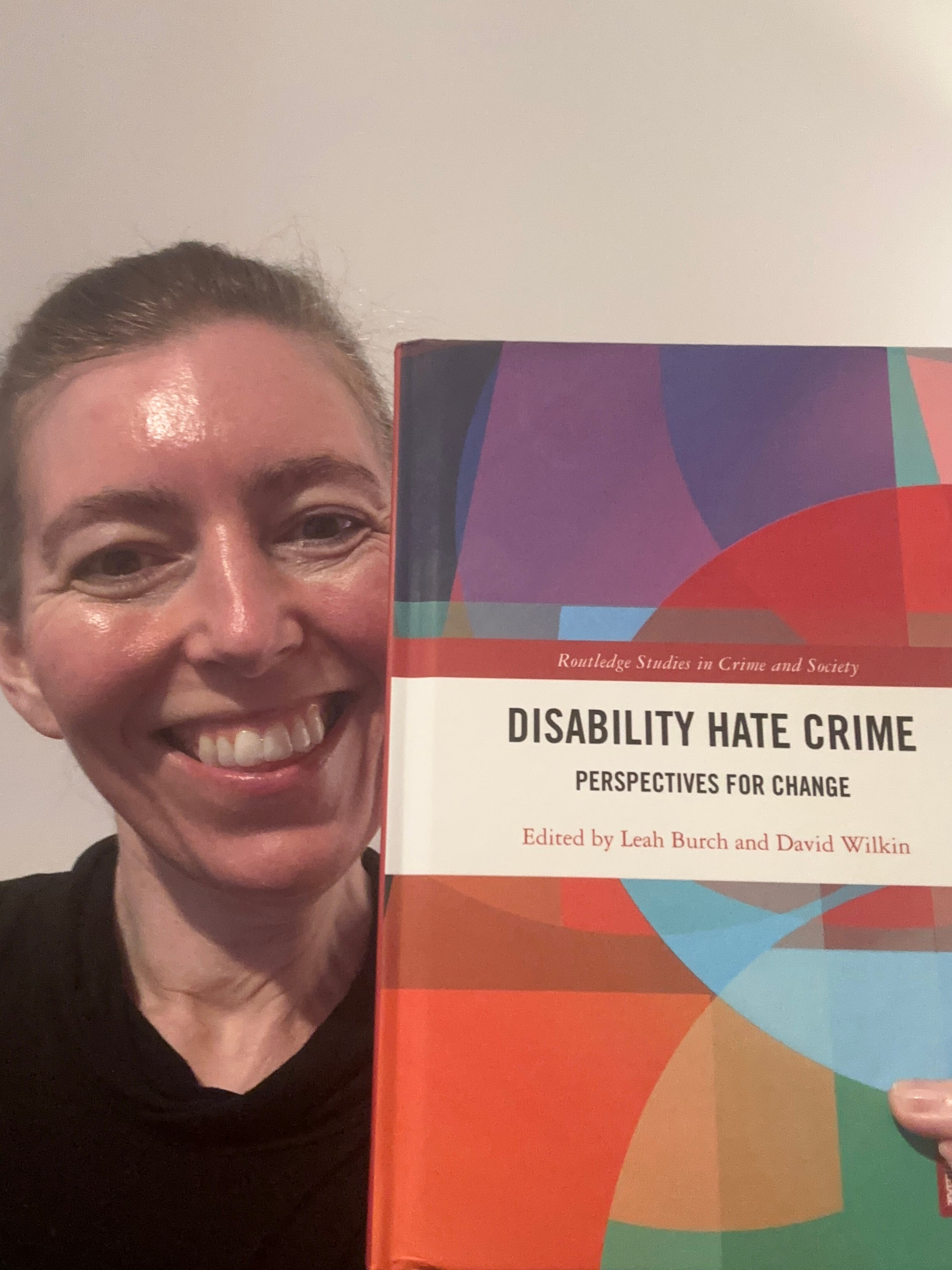
Photo description: Holding a copy of Disability Hate Crime: Perspectives for Change (Routledge, Taylor & Francis), which includes my chapter “Structural Disability Hate”.
A year ago, I had the privilege of publishing a chapter in the book Disability Hate Crime: Perspectives for Change, edited by Leah Burch and David Wilkin.
The book was published by Routledge, part of the Taylor & Francis academic publishing group, one of the world’s leading publishers of research and educational books. The volume brings together internationally respected scholars and disability researchers exploring how disability hate operates and how society can change.
Looking back now, I feel both proud and humbled to have contributed to such a significant collection of scholarship.
The book contains a remarkable depth of knowledge from authors around the world. Many of the contributors are recognised experts in disability studies, sociology, criminology and social policy. Reading the chapters together is genuinely striking — the range of perspectives and research is immense.
I would strongly recommend the book to students not only studying disability studies, but also those in fields such as sociology, social policy, criminology, and health humanities.
Book information
My Chapter: Structural Disability Hate
My chapter is titled “Structural Disability Hate.” (Chapter 6)
Although my PhD did not focus exclusively on disability hate crime, my research opened up questions about something that often sits beneath individual acts of hostility — structural disability hate.
This concept looks beyond individuals committing hate crimes and instead examines how institutions, organisations and systems can perpetuate harm towards disabled people.
In the chapter I argue that when organisations or systems produce discriminatory outcomes that harm disabled people, these should be taken as seriously as individual acts of disability hate.
This perspective shifts the discussion away from simply identifying individual perpetrators and instead encourages a closer examination of the structures that allow inequality and harm to persist.
The Role of Lived Experience
My research used autoethnography, a method that allows researchers to examine their own lived experience alongside interviews and existing scholarship.
In simple terms, autoethnography means analysing personal experience within a wider social and academic context.
Within my research I also explored what I describe as the “graphy” element of autoethnography — the presentation of knowledge. This includes how research is communicated, how accessible it is to readers, and how language and layout can either include or exclude people.
This interest in accessible communication has stayed with me long after completing my PhD. It is part of the reason why I now aim to make writing and publishing more accessible to wider audiences, not only academic specialists.
Most PhD theses are publicly available through university research repositories unless they are temporarily embargoed. Historically, many UK theses could also be accessed through the British Library’s EThOS service. However, access to that system has been disrupted since the British Library’s 2023 cyber-attack, and many theses are currently easier to locate directly through university repositories instead.
My PhD thesis is openly available here:
https://doi.org/10.25392/leicester.data.28730849
The Stories Behind the Research
Two of the most powerful elements of my chapter came from interviews conducted during my doctoral research.
These interviews were connected to projects I developed during my PhD, including the Disabled Peoples Project and Disabled Actors Project, which shared biographies and lived experiences across digital platforms. Alongside this, I also reflected on many of these stories through my digital diary, Diary of a PhD Student, which documented parts of my research journey in real time.
Two individuals whose stories feature in both my thesis and the chapter are Kirsty and Sarah.
What struck me most when speaking with them was their extraordinary strength and resilience — their ability to adapt, improvise and overcome immense challenges.
In Kirsty’s case, her story is inseparable from that of her late son Reece, who tragically died from Ewing sarcoma as a teenager. Reece’s name appears in the acknowledgement section of my PhD thesis, recognising the impact that his story and his family’s experience had on my research journey.
Both Kirsty and Sarah use social media platforms to raise awareness and support others, sharing their experiences in ways that help people facing similar challenges feel less alone. Their online presence highlights the growing role of digital storytelling and peer support within disability communities.
Kirsty’s work in particular has helped raise awareness and support for other families navigating experiences linked to childhood cancer and loss. Her story shows how devastating experiences can sometimes lead people to help others facing similar circumstances.
At the same time, the stories shared in my research also highlighted the structural barriers people often face — barriers that can be intensified by the intersection of disability, class, and access to resources.
Listening to these experiences deepened my understanding of how structural disability hate can manifest within everyday systems and institutions.
Mentorship and Academic Support
Another reason this chapter means so much to me is the involvement of Dr David Wilkin, one of the editors of the book.
David was initially a mentor during the early stages of my PhD and later joined my supervisory team. I first reached out to him at the beginning of my doctoral journey, and he responded warmly and generously with his time and advice.
Over time, that contact developed into a natural mentoring relationship that supported my research journey.
For anyone starting a PhD, my advice would be simple: build relationships early. Reach out to researchers whose work inspires you. Conversations — whether through email, phone or video — can open doors and create networks that continue long after the PhD itself.
The people and contacts I developed during my doctoral research have remained incredibly valuable to me.
David himself has made a significant contribution to the field of disability hate research and campaigning over many years, helping bring attention to issues that affect disabled people across society.
The Accessibility Question
One reason I did not publicise the book widely when it was first released was its price.
At the time the hardback edition cost over £100, which is not unusual for academic books but places them beyond the reach of many individual readers.
Over the past year I have been building the Emma Astra Foundation and Pen Pals Publishing to explore ways of making books and knowledge more accessible and affordable.
So I was pleased to see that the book has since been reduced to around £42.99, which makes it more accessible for students, researchers and interested readers.
Academic publishing still has work to do in improving accessibility. Cost, availability, language and format all matter. Wider use of affordable e-books, audio formats, and clearer writing styles can help research reach more people beyond university libraries.
Making knowledge accessible is something I care deeply about, and it is part of the mission behind the Emma Astra Foundation.
A Year Later
Looking back one year later, I feel incredibly grateful to have contributed to a book containing such a wealth of scholarship and insight.
I remain thankful to the editors and Routledge for their professionalism and support throughout the publication process. As an author I was provided with both a hardback copy and an e-book edition free of charge, which is something my family will always be able to keep as part of this journey.
Most importantly, the questions raised in the chapter remain just as relevant today.
Structural disability hate is often harder to recognise than individual acts of hostility.
Yet understanding how systems and institutions shape people’s experiences may be one of the most important steps towards creating a more just and inclusive society.
Dr Emma Astra (PhD)
Writer, researcher and founder of the Emma Astra Foundation
Creativity. Community. Connectivity.
About the Author
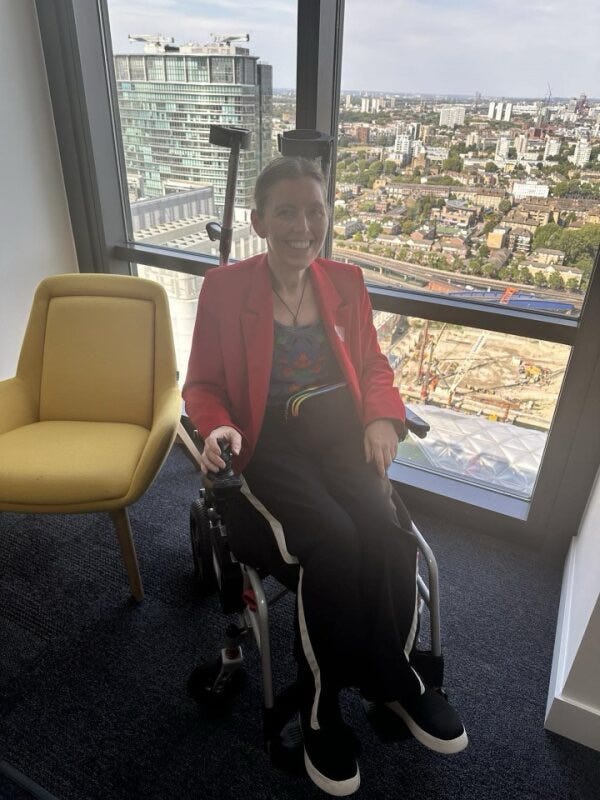
Dr Emma Astra (PhD) is a Leicester-based writer, researcher and Lived Experience Expert. She is founder of the Emma Astra Foundation and aims to make research, creativity — including journalism, books and digital storytelling — and publishing more accessible to wider audiences.
© Emma Astra, 2026