
Learning to Write From Lived Experience: A New Visual Writing Series
Turning real experience into writing across memoir, journalism, research and storytelling. #1

By Dr Emma Astra (PhD), Lived Experience Expert, 16 March 2026
Article number 1 in series.
I have recently started a new visual writing series on the Lemon8 platform, which is part of the wider TikTok ecosystem. The series explores how lived experience can become writing across many different forms — including memoir, journalism, essays, research, creative nonfiction, fiction and even social media storytelling.
This series also builds on my earlier short guide, How to Write About Lived Experience in Essays, which I published last year. Since then my thinking has continued to develop, and the Lemon8 series is helping me explore these ideas further in a more visual and accessible way. In time, the material may contribute towards a subsequent book expanding on how to write from lived experience.
At the same time, sharing practical knowledge freely is an important part of the mission behind the Emma Astra Foundation. One of its aims is to make ideas, creativity and knowledge more accessible. Not everyone learns or communicates in the same way, so I try to share ideas through multiple formats and platforms — writing, visual guides, articles and videos — so that people can engage with them in ways that suit their own learning styles.
The Lemon8 series therefore sits within a wider project: exploring how lived experience can be shared, understood and developed into meaningful writing that connects with others.
The Lemon8 Carousel Series
The series begins on the Lemon8 platform, which is TikTok’s sister platform and a rapidly growing space where creators share visual guides, lifestyle content and educational journalism.
You can view the original carousel here:
Lemon8 platform (TikTok’s sister platform – free to view but the app must be downloaded):
https://v.lemon8-app.com/s/AgYSSxhyT
Because not everyone uses Lemon8 or has the app installed, I will also repeat the visual guides here on Substack with additional explanation.
The First Carousel: Learning to Write From Lived Experience
Below is the first carousel from the series.
Carousel Slide 1
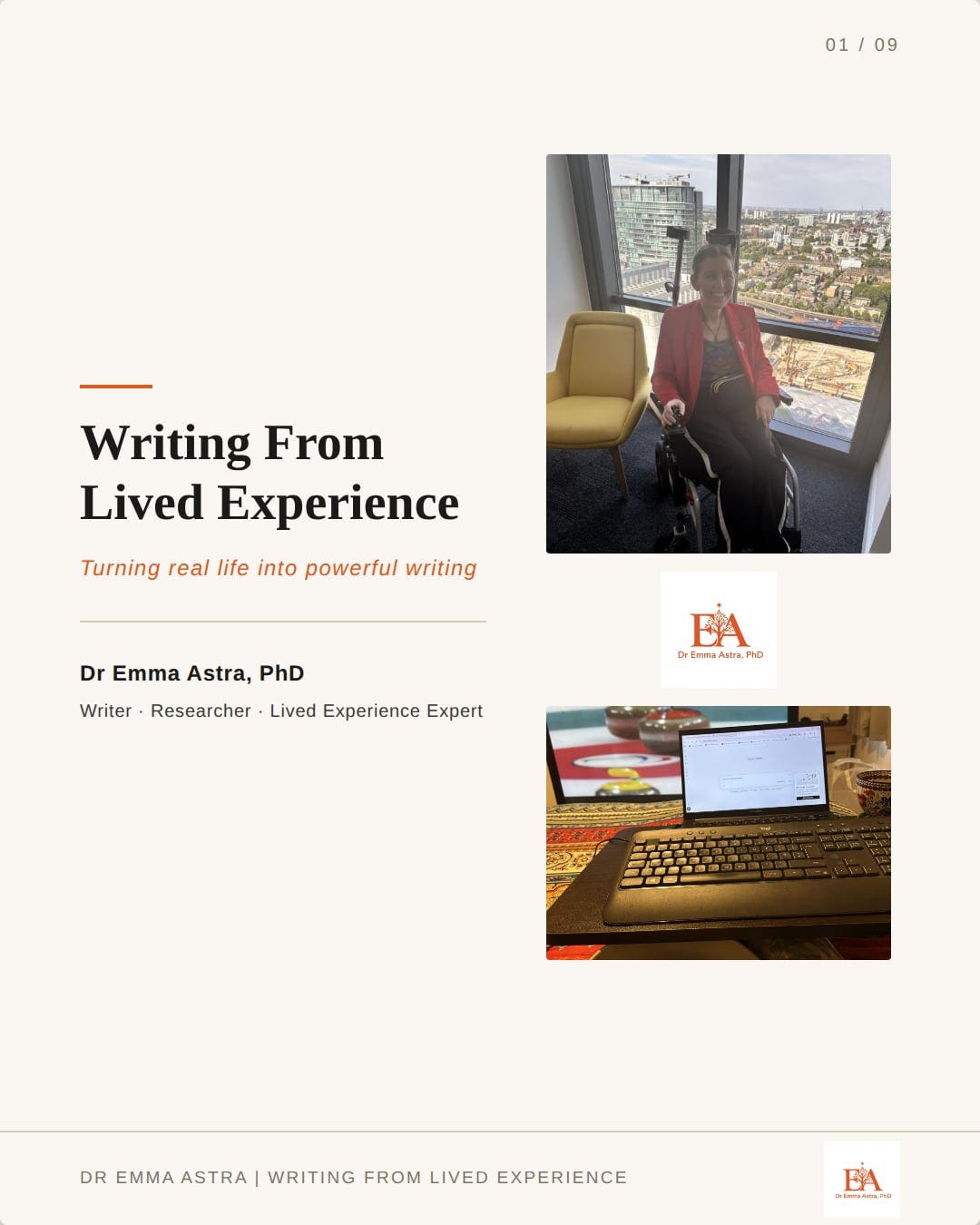
This opening slide introduces the central idea of the series: that lived experience is not simply personal reflection, but can become meaningful writing, knowledge and storytelling.
Carousel Slide 2
(What this page explores)
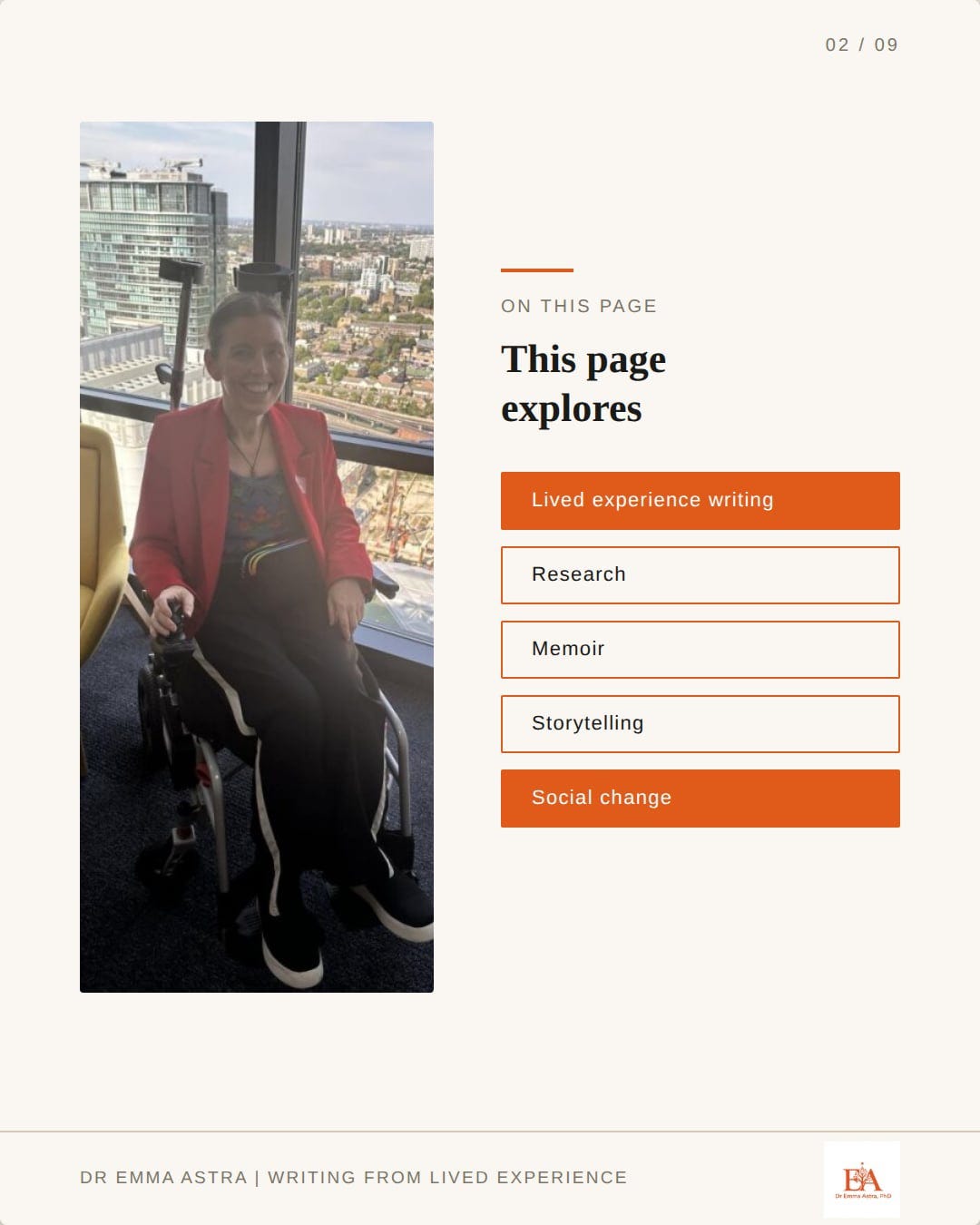
This slide introduces the different types of writing the series explores, including memoir, journalism, research and storytelling.
The aim is to show that lived experience writing is not limited to one format.
Carousel Slide 3
(Why real stories matter)
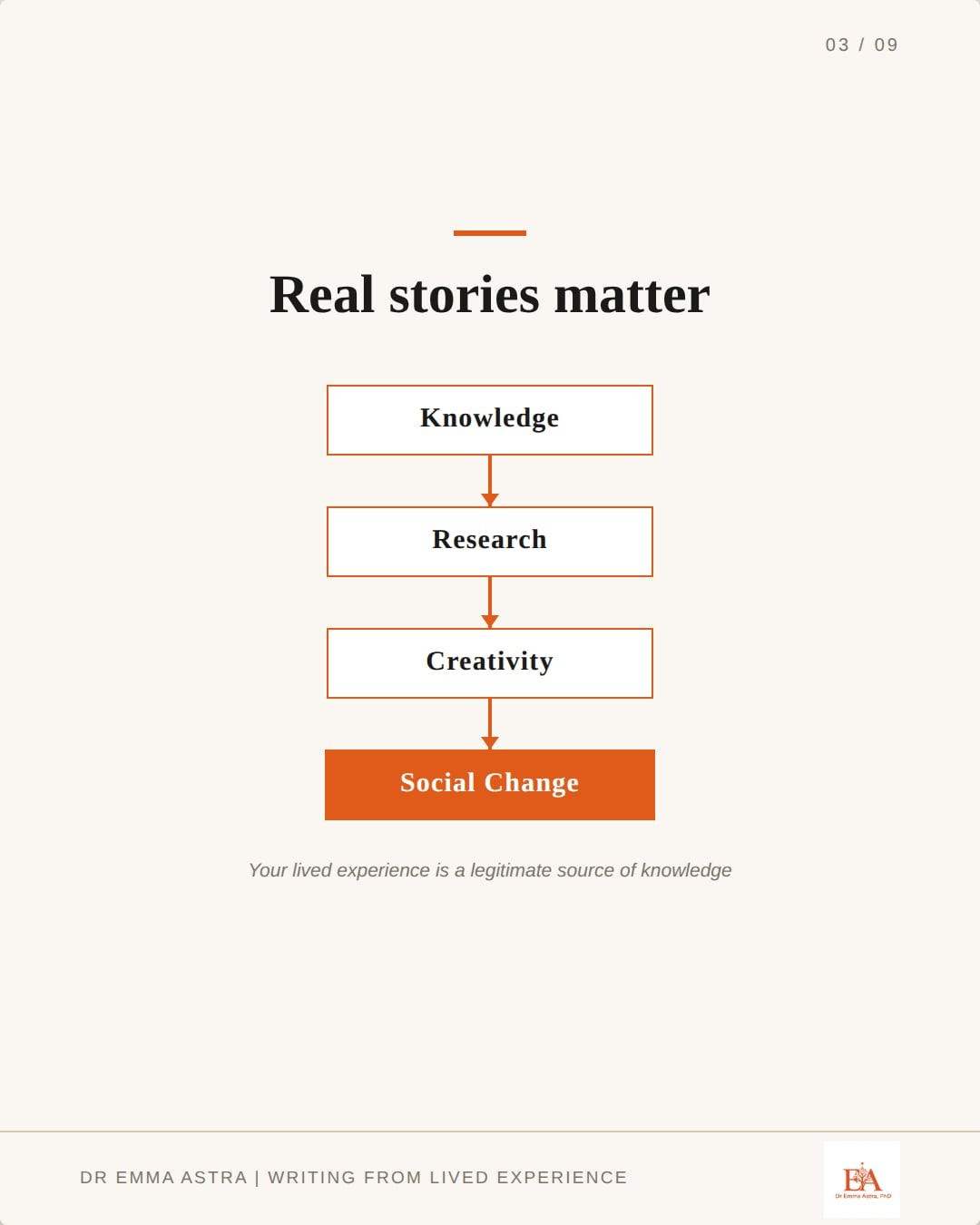
Lived experience writing is increasingly recognised as an important contribution to public discussion and research.
Personal perspectives can offer insights that traditional research methods sometimes overlook.
Carousel Slide 4
(Writing happens everywhere — laptop bed trolley photo)
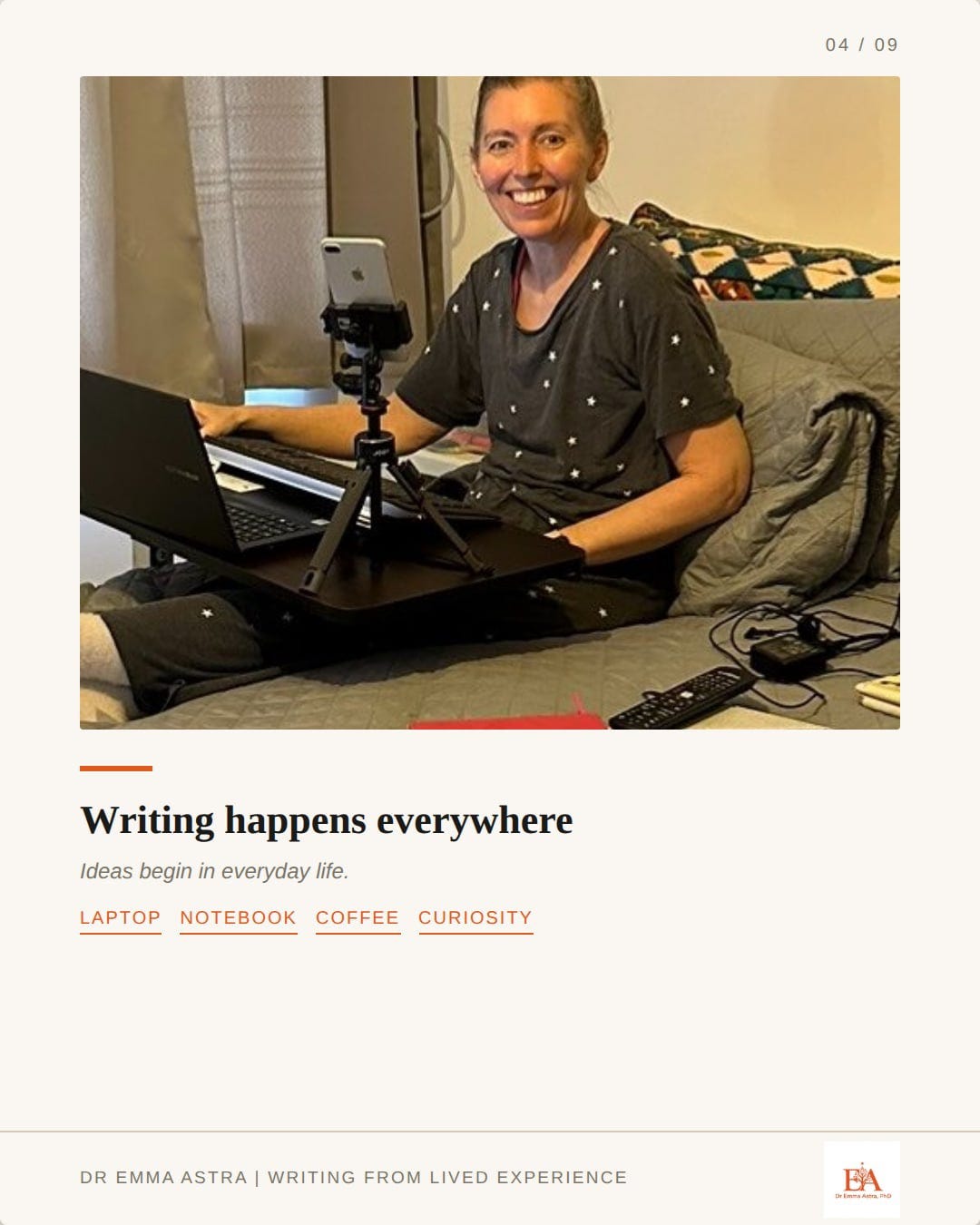
Writing rarely happens in perfect conditions.
Ideas often begin in everyday environments — a laptop on a bed desk, a notebook nearby, coffee within reach.
Part of writing from lived experience is recognising that the ordinary moments of life are often where writing begins.
Carousel Slide 5
(Writing environment — keyboard desk photo)
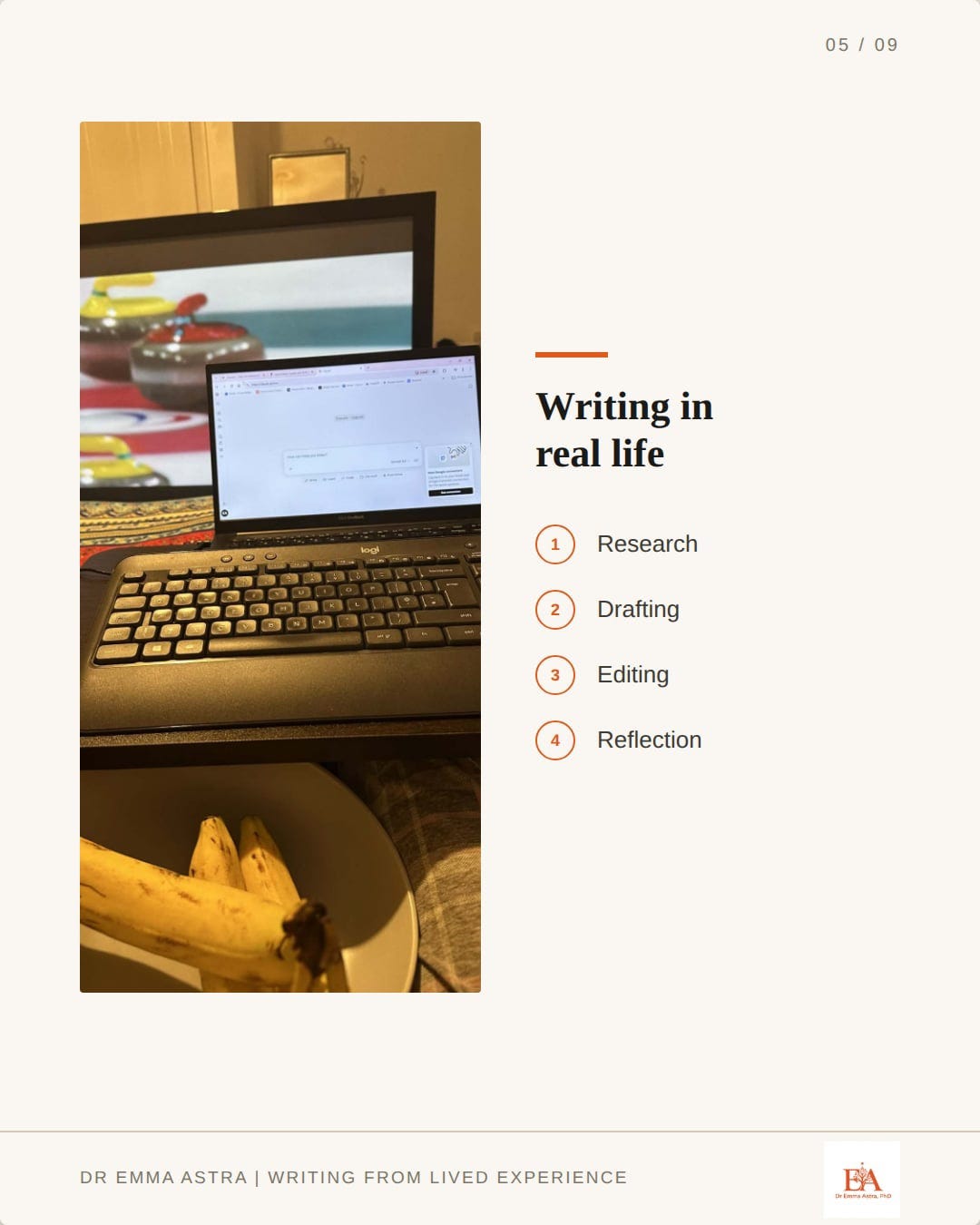
The writing process itself is rarely linear.
It moves through stages such as:
• drafting
• editing
• reflection
• revisiting experiences
Lived experience writing often involves shaping memories and experiences into narratives that others can engage with.
Carousel Slide 6
(What I share here)
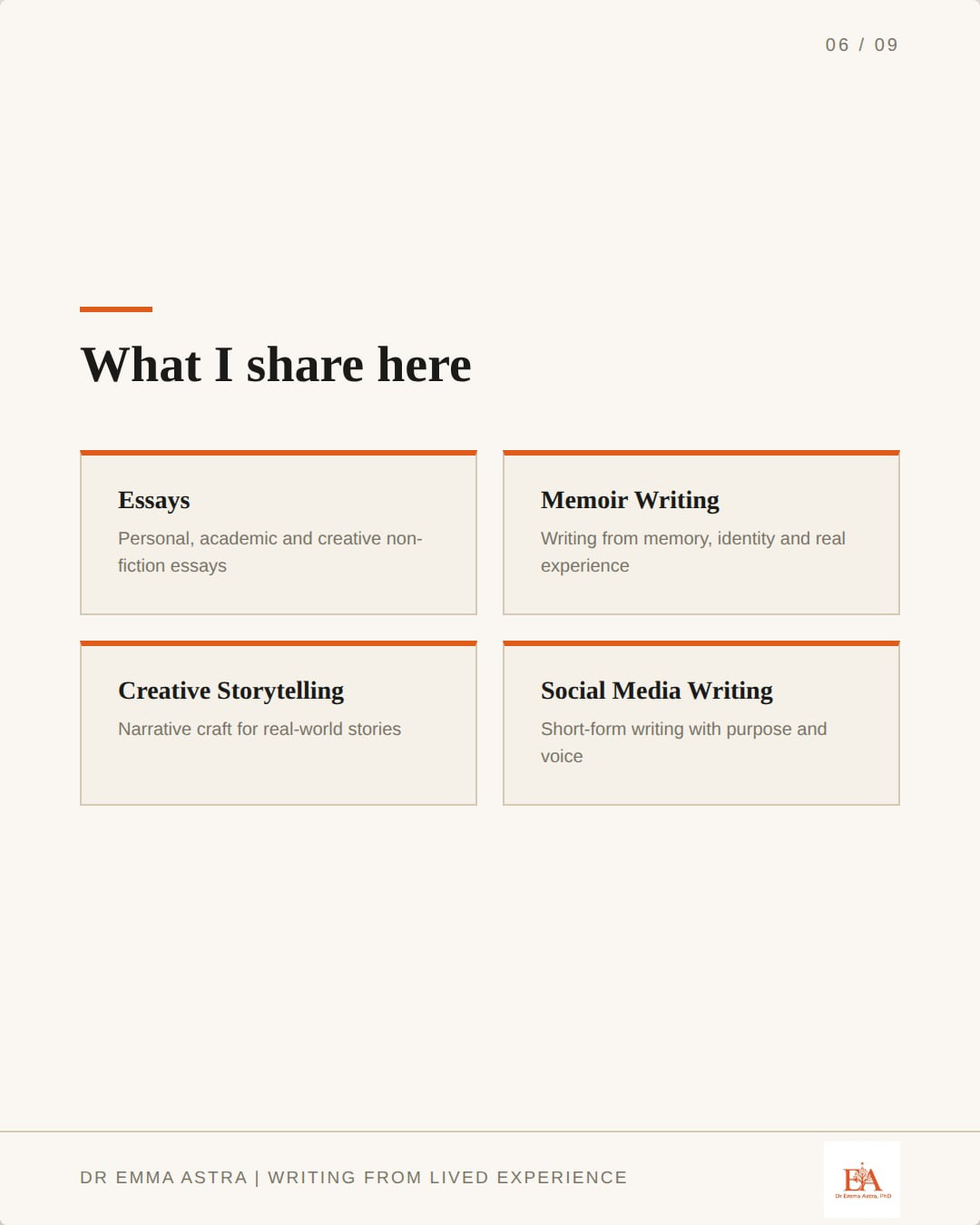
Throughout this series I will share practical ideas about how to write lived experience through different forms of writing, including:
• essays
• memoir
• storytelling
• writing for social media
Carousel Slide 7
(AI and writing slide)
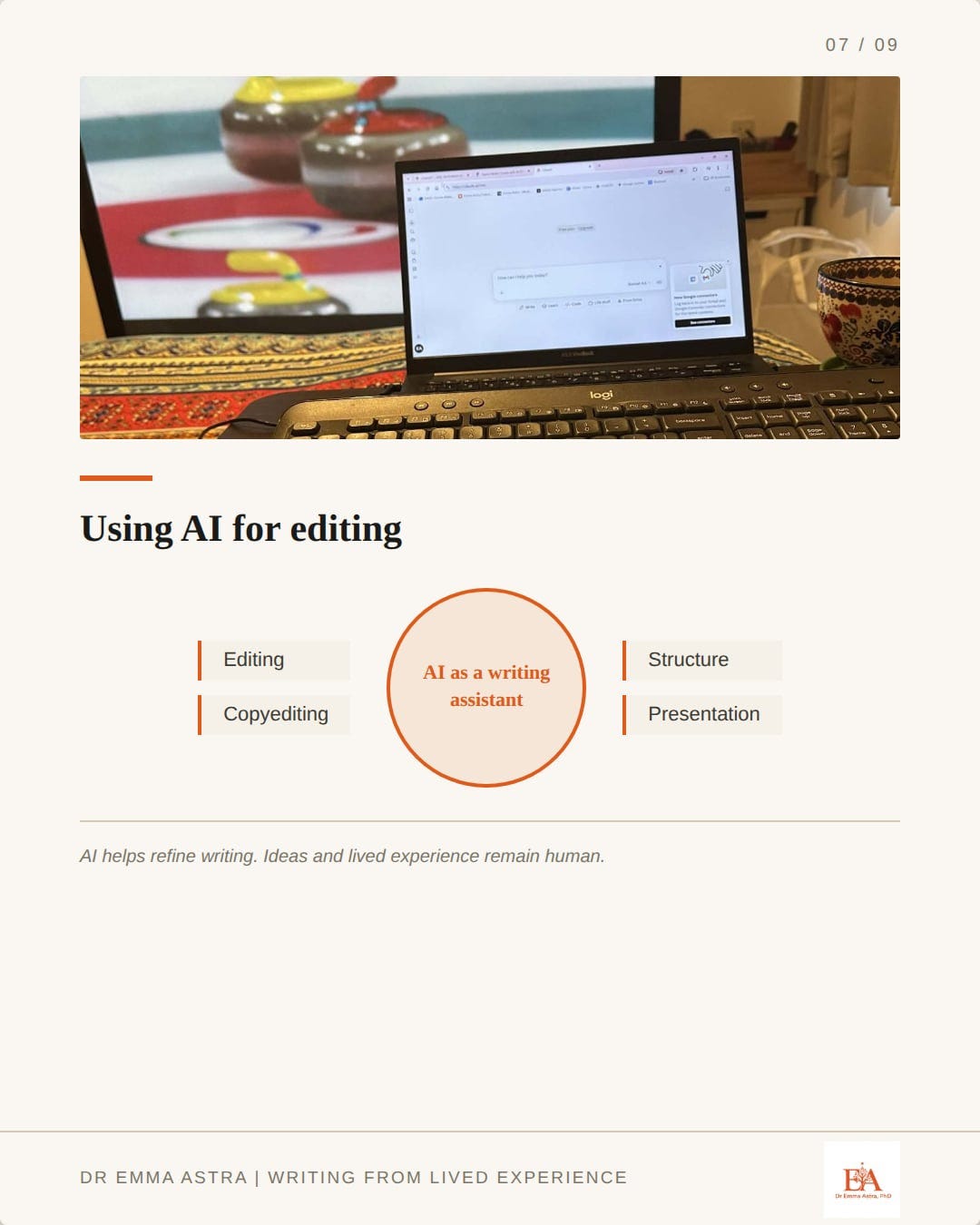
One topic that often raises questions is the role of AI tools in writing about lived experience.
There is sometimes a misconception that AI cannot be useful in this type of writing. In practice, AI can assist certain parts of the writing process.
In my own practice, AI is used carefully and responsibly for tasks such as:
• editing drafts
• structuring writing
• copyediting
• visual presentation
The ideas, experiences and stories themselves remain human.
For those interested in how I experiment with AI tools in writing — for example in editing, structuring ideas and presenting writing visually — I document some of this process in my AI learning diary on YouTube.
YouTube AI Journey Series (some videos relate directly to this writing series):
https://youtube.com/@emmaastra
Click “Shorts” at top of YouTube as all the series is less than 3 minutes and there. Or click this link:
www.youtube.com/@emmaastra/shorts
Carousel Slide 8
(About the author slide)
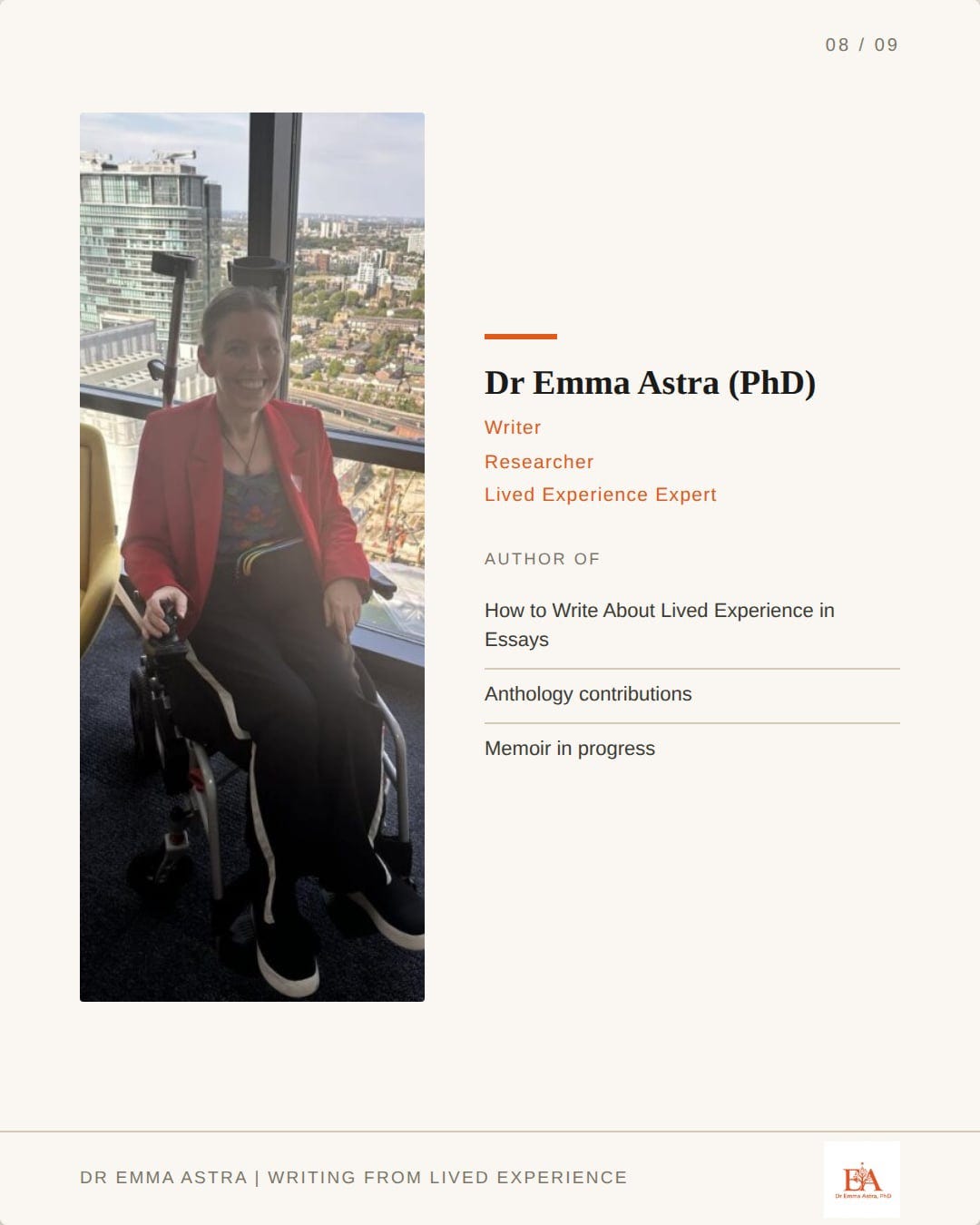
For those new to my writing:
I am Dr Emma Astra (PhD), a writer, researcher and lived experience expert with a background in social work and a PhD in Media, Communication and Sociology.
My writing often focuses on storytelling, lived experience and making knowledge accessible beyond traditional academic spaces.
Carousel Slide 9
(Quote slide)
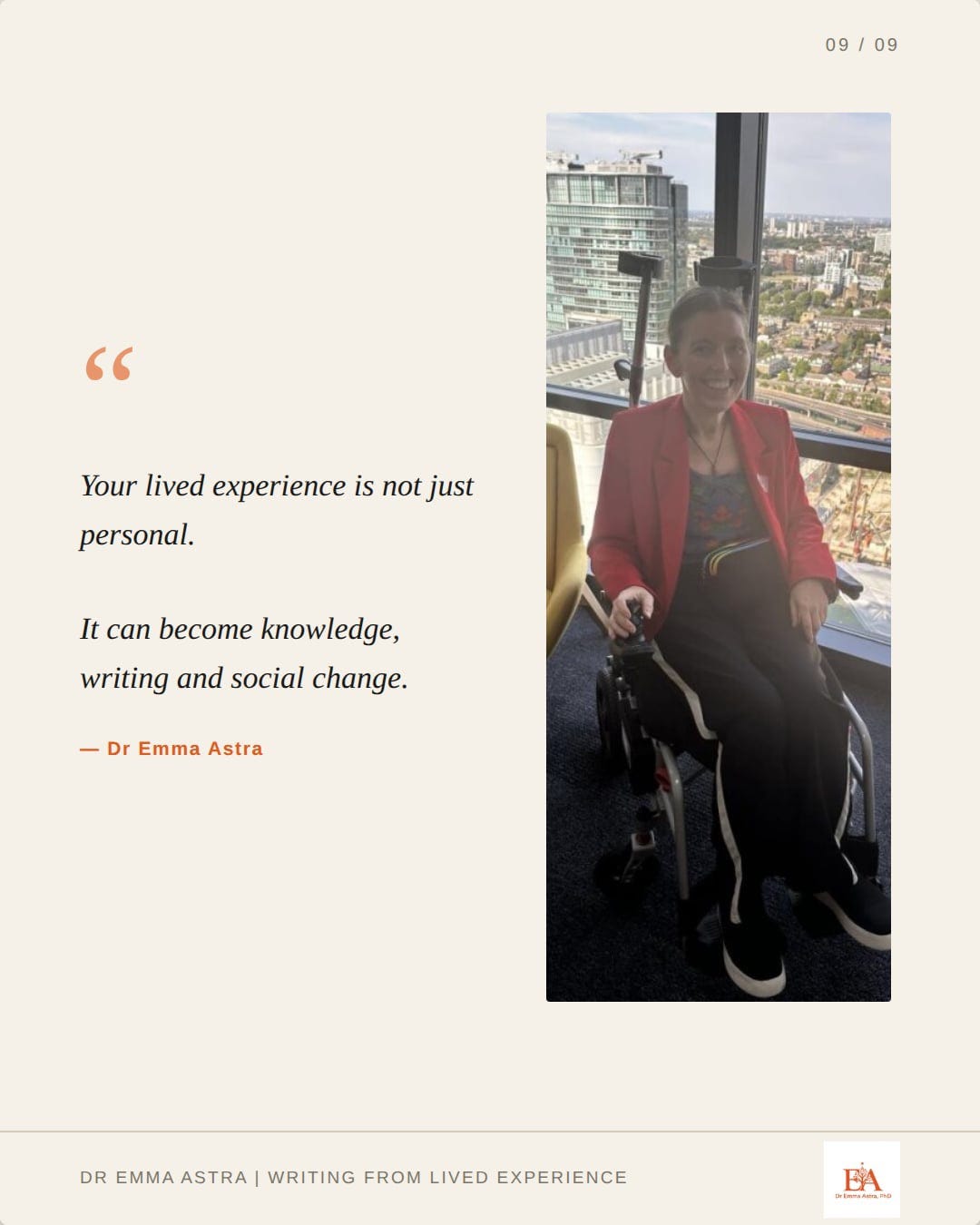
The closing slide summarises the central idea of the series.
Lived experience is not simply personal history.
It can become writing, knowledge and social change.
Why Repeat the Series on Substack?
Not everyone uses Lemon8, and viewing links often requires downloading the app.
For that reason I will also share the series here on Substack alongside additional commentary and explanation.
Substack allows the ideas behind each carousel to be expanded into short articles, making them accessible to readers who prefer longer text.
What Comes Next
Future posts in this series will explore questions such as:
• What is lived experience writing?
• How can personal experience become journalism?
• How does memoir differ from reflective essays?
• Can fiction be informed by lived experience?
• How can social media be used as a form of storytelling?
Most important tips how you can use the techniques to share your individual story.
Each post will combine visual guides from Lemon8 with expanded discussion here on Substack.
Closing
Writing from lived experience is not only about telling personal stories.
It is about transforming experience into writing that can inform, connect and inspire others.
If you are interested in writing, storytelling and developing your own voice, this series aims to provide practical ideas for doing exactly that.
About the Author
Dr Emma Astra (PhD) is a writer, researcher and lived experience expert who explores storytelling, writing and accessible knowledge. Through the Emma Astra Foundation she shares ideas across platforms — including Substack, Lemon8 and YouTube — to help people develop their voice and write from lived experience.
You can follow this series across Lemon8, Substack and YouTube as it develops.
www.linktr.ee/emmaastra
© Emma Astra, 2026